

Couples & Family Therapy in Norman and Online Across Oklahoma
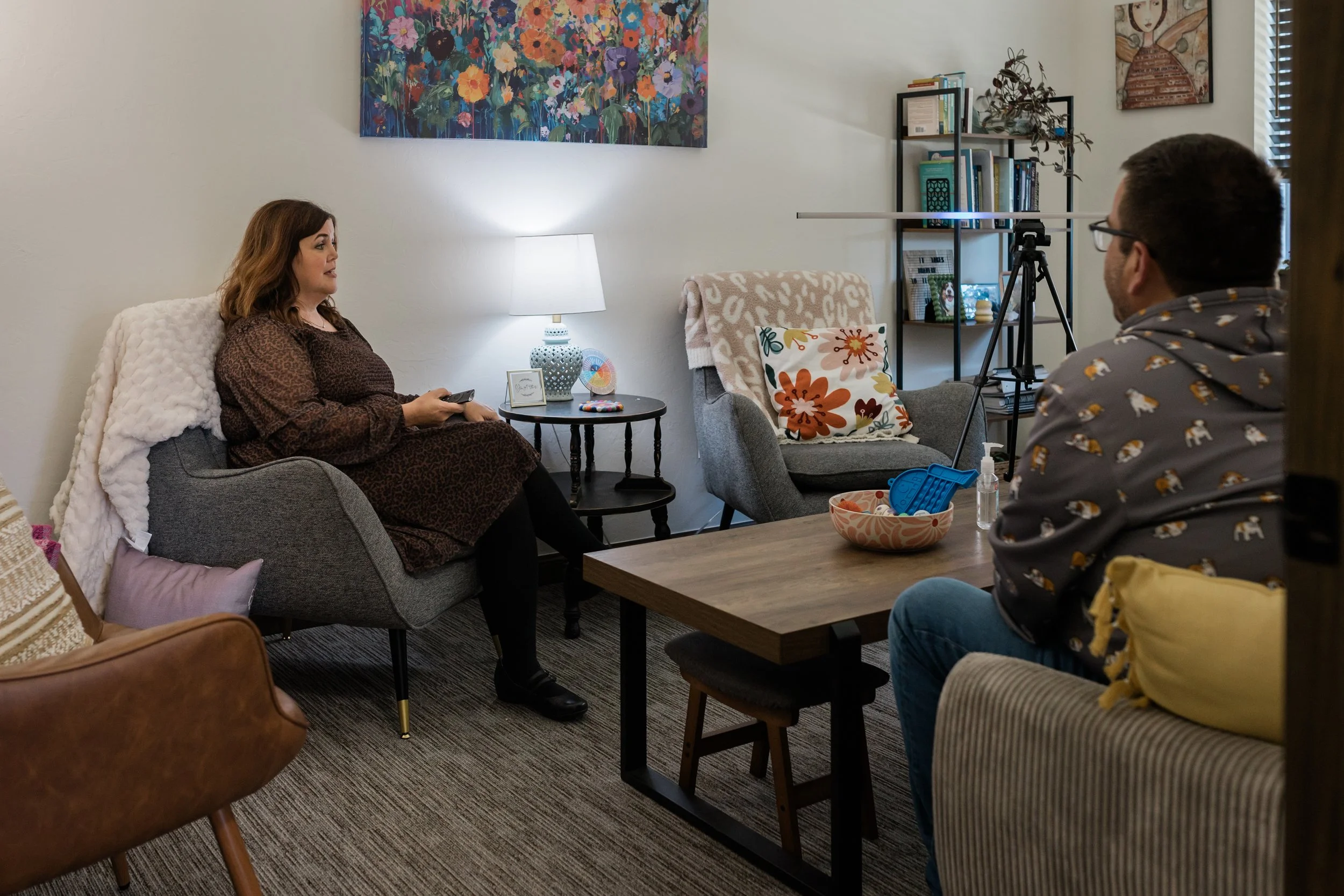
Relationships can be strong and still get strained.
Inner Circle provides couples, marriage, and family therapy for people navigating communication problems, conflict, disconnection, trauma, parenting stress, major life changes, and the pressures that demanding careers can bring home.
We specialize in working with first responders, veterans, healthcare professionals, high-stress professionals, and their families, while also serving couples and families throughout the broader community.
Meet with us in person in Norman or through secure online therapy anywhere in Oklahoma.
In-person in Norman | Online throughout Oklahoma | Insurance & private-pay options
When Something Between You Isn't Working
You don't have to be on the verge of separation to come to couples or family therapy.
Sometimes the problem is obvious. Other times, you just know the relationship doesn't feel like it used to.
You may be:
Having the same argument over and over
Communicating less—or only talking about logistics
Feeling more like roommates than partners
Struggling to reconnect after a difficult season
Carrying resentment that never quite gets resolved
Navigating trust issues, secrecy, or infidelity
Disagreeing about parenting or family responsibilities
Adjusting to a major career or life transition
Watching work stress affect your home
Trying to support someone who seems emotionally distant
Feeling like one person is carrying more of the family load
Doing relatively well but wanting to protect the relationship before problems grow
Couples therapy isn't about deciding who is right. It's about understanding what's happening between you and building healthier ways to move forward together.
What Couples & Family Therapy Can Help With
-
You talk, but somehow nothing gets resolved—or every conversation turns into defensiveness, silence, frustration, or another argument.
Therapy can help you recognize the patterns underneath those conversations and develop more effective ways to communicate, especially during stressful moments.
-
Relationships can slowly become focused on work, children, schedules, bills, and getting through the week.
We help couples understand how that distance developed and begin rebuilding connection, intimacy, friendship, and a sense of partnership.
-
Broken trust can leave both partners unsure what comes next.
Whether you're dealing with infidelity, secrecy, dishonesty, or another significant breach of trust, therapy can provide a structured space to understand what happened, establish boundaries, and determine whether—and how—the relationship can move forward.
-
You don't have to wait until your relationship is in trouble.
Some couples use therapy proactively to improve communication, understand each other better, prepare for major transitions, strengthen parenting, or create healthier patterns before stress exposes the weak spots.
-
Chronic stress changes how people communicate, react, sleep, parent, and connect.
For people in high-stress careers, it can be particularly difficult to transition from functioning under pressure at work to being emotionally present at home.
We help couples recognize when occupational stress is affecting the relationship and develop realistic strategies for keeping work from consuming family life.
-
Parenting can create significant strain even in healthy relationships.
We work with families navigating inconsistent schedules, parenting disagreements, blended-family dynamics, behavioral concerns, changing roles, and the challenge of keeping children supported when the adults are stretched thin.
-
Trauma does not only affect the person who experienced it. It can change communication, emotional availability, intimacy, sleep, irritability, trust, and the way a family functions.
We help couples and families understand those changes without allowing trauma to become the center of the entire relationship.
-
Retirement. Promotions. Injury. Career changes. Moving. Parenthood. Loss. Children leaving home. Changes in health.
Even positive transitions can disrupt roles and relationships.
Therapy can help families adjust to what is changing while protecting the relationships that matter most.
Sometimes the job really does change the relationship.
First responder, military, healthcare, and other high-stress families often experience pressures that traditional relationship advice doesn't fully account for.
Shift work. Missed holidays. Mandatory overtime. Sleep disruption. Hypervigilance. Trauma exposure. Emotional compartmentalization. Worry about safety. Difficult transitions after a shift. A spouse who has learned to handle everything alone.
Over time, those adaptations can become relationship patterns.
Specialized Support for First Responder & High-Stress Families

The Things We Often Hear
“I learned to do everything without them.”
First responder spouses often become exceptionally independent because they have to be. That strength can keep a household functioning, but it can also make reconnecting as a team more difficult.
“They came home, but they aren't really here.”
After difficult calls or prolonged stress, withdrawal and emotional shutdown can make a spouse feel pushed away—even when the withdrawal isn't actually about the relationship.
“I don't know what happened, and I don't know if I'm supposed to ask.”
Responders may be protecting their family from what they've seen. Spouses may be trying not to push. Eventually, silence itself can create distance.
“We aren't fighting. We just don't feel close anymore.”
Sometimes relationship strain isn't explosive. It's gradual disconnection caused by exhaustion, stress, different schedules, and years of prioritizing everything except the relationship.
“The job always seems to come first.”
Cancelled plans, missed holidays, unpredictable schedules, and being called back to work can create very real resentment—even when both partners understand why it happens.
Our clinicians understand the culture surrounding high-stress work, so you don't have to spend half the session explaining why your family operates differently.
Hear the Conversation From Inside First Responder Life
What actually happens when chronic stress, trauma exposure, emotional compartmentalization, and responder culture follow someone home?
In 3 Calls In, active first responders talk candidly about what the job can look like after the shift ends—the difficulty switching off, the emotional weight they carry home, and the ways stress can affect spouses, children, and family life.
In a related episode of Inside the Circle, Kate Cooper and Autumn Cooper take that conversation deeper, exploring what those pressures can mean inside a relationship. They discuss emotional shutdown, communication, parenting, work-life boundaries, trauma spillover, and why simply telling someone to “leave work at work” often does not solve the problem.

You shouldn't have to live near Norman to find a therapist who understands your relationship and your lifestyle.
Inner Circle offers secure online couples therapy, marriage counseling, and family therapy throughout Oklahoma.
Virtual therapy can be particularly valuable for couples and families in rural Oklahoma, where specialized relationship or first-responder-informed therapy may not be readily available nearby.
It can also make care easier when you're coordinating:
Shift work
Childcare
Long commutes
Rural travel distances
Two demanding work schedules
Family responsibilities
How Virtual Relationship Therapy Works
Online sessions are provided through SimplePractice, our secure client portal and telehealth platform.
You'll receive appointment reminders and a secure link that allows you to join your session from a compatible device. You can also manage appointments, paperwork, payments, and other parts of your care through your Client Portal.
For virtual couples or family sessions, all participating clients must be physically located in Oklahoma at the time of the appointment.
Our clinicians are currently licensed in Oklahoma. If someone participating in therapy will be outside Oklahoma, contact our office before the session.
Couples & Family Therapy Online Across Oklahoma
What Therapy With Inner Circle Looks Like
Practical, Goal-Focused Care
Relationship therapy should have direction.
Your clinician will work with you to identify what isn't working, understand the patterns contributing to it, and establish goals for what you want to change.
Understanding the Whole System
Relationship problems rarely happen in isolation.
Stress, trauma, sleep, work, parenting, finances, health, family history, mental health, and previous experiences can all influence what happens between people.
We look at the larger picture—not just the argument you had Tuesday night.
No Automatic Villain
Couples therapy shouldn't feel like bringing in a professional to decide which person is the problem.
Our goal is to understand the relationship dynamic, help each person recognize their role within it, and create healthier patterns where change is possible.
Culturally Competent Care
Inner Circle was built around people living and working under unusual levels of stress.
Our clinicians receive specialized training in trauma and culturally competent care for first responders, veterans, healthcare professionals, and high-stress populations while providing individualized relationship and family care to clients from all backgrounds.
Paying for Couples & Family Therapy
Use insurance, pay by the session, or make mental health care part of your routine with an Inner Circle Membership.
Everyone uses therapy differently. Some people come in for a specific concern. Others want a consistent place to process stress, stay ahead of burnout, work on relationships, or maintain the progress they've already made.
That's why Inner Circle offers several ways to access care.
Inner Circle Membership
For couples who want consistent relationship care, an Inner Circle Membership may provide a predictable way to make therapy part of your routine.
Depending on your treatment plan and clinical needs, eligible membership sessions may be used for individual, relationship, or family therapy.
Memberships are particularly useful for couples who want ongoing support rather than waiting until the relationship reaches a crisis.
-
4 therapy sessions per month
Best for clients who want regular weekly support or are actively working through something that benefits from greater consistency. This may include trauma recovery, significant stress, anxiety or depression, major life transitions, relationship strain, or periods when someone simply needs more support.
Good for: active treatment, higher-stress periods, trauma work, major transitions, weekly accountability and support.
-
2 therapy sessions per month
Best for people who want consistent support without needing weekly therapy. This gives clients enough frequency to actively work on stress, relationships, anxiety, burnout, trauma recovery, or life changes while still leaving space between sessions to practice what they're learning. Additional sessions are currently available for $60 each.
Good for: ongoing therapy, moderate stress, relationship concerns, burnout prevention, active personal growth.
-
1 therapy session per month
Best for people who are doing well overall but want to stay connected to a therapist, maintain progress, manage ongoing stress, or catch problems before they become crises. This can also work well after completing more intensive trauma treatment or during relatively stable seasons of life.
Good for: maintenance, resilience, monthly check-ins, ongoing self-awareness, post-treatment support.
-
Priority Scheduling
Members receive priority access to their clinician’s schedule, including appointment times reserved specifically for members.Predictable Monthly Cost
Know what you’ll spend on therapy each month with straightforward membership pricing and no surprise session costs.Our Lowest Private-Pay Rates
Membership sessions are offered at our most affordable private-pay rate, making ongoing care easier to plan for.Flexible Session Use
Depending on your needs and treatment plan, sessions may be used for individual, relationship, or family therapy.Less Stress Around Schedule Changes
Active members are not charged our standard late-cancellation or no-show fees, giving you more flexibility when work, family, or an unexpected call changes your plans.Session Rollover
Can’t use a session this month? Eligible unused sessions can roll over for up to 60 days, so you have more flexibility to use the care you’re paying for.HSA & FSA Eligible
Membership therapy expenses may be paid using eligible HSA or FSA funds.No Insurance Claims for Membership Sessions
Membership sessions are paid directly rather than submitted to insurance, giving you another option for accessing care without using your behavioral health benefits.Stay Connected to a Therapist Who Knows You
Perhaps the biggest benefit: you have an established relationship with a clinician who already understands your history, goals, stressors, and progress—so when life gets harder, you don’t have to start from the beginning.

Use Your Insurance
Inner Circle accepts several insurance plans.
Coverage for couples and family therapy can vary significantly depending on your insurance plan and the reason for treatment. Our office can help verify your benefits and provide available cost information before you begin.

Private Pay
Private-pay sessions with fully licensed clinicians are $160 per session.
Lower rates may be available with provisionally licensed clinicians based on current availability.
Call or text the office for current options.

You Don't Have to Keep Having the Same Fight
Whether you're dealing with a major rupture or simply realizing that your relationship has become harder than it needs to be, you can do something about it.
Meet with an Inner Circle therapist in Norman or online anywhere in Oklahoma.
We'll help you find a clinician who fits your needs and determine the best place to start.